Unique Vending Machines
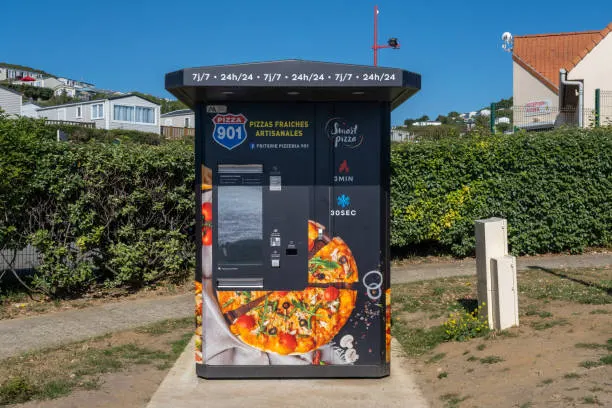
Buy one vending machine stocked with something more interesting than chips and soda — fresh pizza cooked to order, phone-case printing, claw-machine prizes, novelty or K-beauty items, secondhand books, or a smart cooler of local snacks — place it in a high-traffic spot, and collect recurring small-ticket sales. Specialty machines command higher prices and margins than standard snack/drink machines, and a good location compounds: the same unit economics apply whether it's your first machine or your fifth.
Real cash flow per machine, and better than the generic guides suggest: a well-placed or genuinely specialty machine clears $500–1,000+ a month net, not the $40–120 the category is usually written off with. This is the most heavily sourced idea in the free set — six independent sources on placement revenue, specialty margins and contract terms — and they agree on the same thing: the machine is a commodity and the location is the asset. Which is the useful part, because a location can be secured before a single dollar is spent, and the whole first phase of the plan below is doing exactly that.
Machines don't have to earn only from what's dispensed. Many operators add a second revenue line by selling ad space on the machine's screen or wrap ($50-150/month from a local business), and specialty machines can bundle categories (drinks + snacks + local-vendor goods in one smart cooler) to raise the average ticket instead of adding a second unit. If you can't find a great location yourself, some property owners will trade favorable placement terms for a revenue-share instead of a flat commission — worth proposing before you assume the standard 10-20% commission is the only structure available.
Cold-drink machines see a mild summer bump; snack-only machines are close to flat year-round.
Suits you if
- ✓You can personally check and restock a machine at least weekly, or hire someone who will
- ✓You can secure a real location agreement before buying equipment, not after
- ✓You're building a route of several machines over time, not betting everything on one
- ✓You're comfortable with hands-on logistics — this isn't a 'set and forget' business
Skip it if
- ✕You were budgeting for one machine to replace a salary
- ✕You can't get a location agreement in writing before buying
- ✕You want a fully passive investment — restocking and machine issues need real attention
- ✕You're in a market already dense with vending operators for the same product category
| Units | Revenue range | Note |
|---|---|---|
| 2 | $1,400–$5,800 | Manageable solo alongside a day job |
| 3 | $2,100–$8,700 | Restocking becomes a weekly route, not an errand |
| 5 | $3,300–$13,000 | Needs a real route plan; telemetry pays for itself |
| 10 | $6,000–$24,000 | Full route — likely needs part-time help or a second person |
| 20 | $10,000–$44,000 | Non-linear: the best specialty spots get taken first, so the per-machine average drops as you scale — treat this as a real small business, not a side hustle |
Skills: No qualification needed. Basic mechanical troubleshooting, inventory math, and the willingness to cold-pitch property managers and business owners for a location are the real skills. For specialty/unique machines (food, printing, novelty), sourcing a reliable equipment vendor and a consistent supply chain for the product itself matters as much as the location.
What $2,156 actually buys$2,156–$6,985 · 8 line items
| Line item | Low | High |
|---|---|---|
| Vending machine, used (basic) to new (specialty)REQ'DBasic used snack/drink machines start around $1,200; new specialty machines (food, printing, novelty) run $4,000-$10,000+ | $1,200 | $4,000 |
| Cashless payment reader retrofitREQ'D | $150 | $400 |
| Delivery/installationREQ'D | $100 | $500 |
| Initial inventory/product stockREQ'D | $150 | $600 |
| Business registration + sales tax permitREQ'D | $50 | $150 |
| General liability insurance, year 1REQ'D | $300 | $600 |
| Location permits (varies by state) | $10 | $100 |
| Contingency (10%) | $196 | $635 |
Unit economics$1.32 per sale · break-even at ~4 vends/day
Per sale
- Average price per vend (standard to premium item)
- $2.25
- Product cost per vend
- −$0.85
- Card processing (avg)
- −$0.08
- Contribution
- $1.32
Fixed costs per year
- Location commission (15% of gross)
- $500
- Insurance
- $450
- Restocking travel/time (fuel)
- $300
- Machine maintenance/repairs
- $250
- Telemetry/payment processing base fee
- $120
- Total
- $1,620
What that means
About $1.32 of every $2.25 vend is contribution — a 59% margin — before the ~$135/month of fixed costs each machine carries. A genuinely specialty product supports a higher price point against nearly the same cost base, which is where the real gap between a $700 machine and a $2,900 one comes from.
What kills this business5 risks · 2 high severity
First 90 days4 phases · 3 gates
Cold-pitch property managers, gyms, offices, and apartment complexes for a written location agreement covering commission, space, and liability for theft/vandalism.
Buy a used, cashless-ready machine (or a specialty machine if that's your angle) matched to the location's foot traffic; register the business and get a sales tax permit.
Install at the location, stock initial inventory, and set up a restocking schedule.
Compare actual weekly sales against the break-even volume before buying a second machine — a second machine in a similarly mediocre spot compounds the mistake instead of fixing it.
Tools, by stage$20-40/month · 3 things not to build
Validate
- —A simple spreadsheet tracking restock cost vs. sales per visit
- —Calls/visits to 10+ potential locations before buying anything
Launch
- —Cashless payment processor (Nayax, Cantaloupe, or similar)
- —Basic telemetry/remote monitoring once you have 2+ machines
- —QuickBooks or similar for sales tax tracking
Do not build
- ×A custom inventory app before you have 3+ machines — a spreadsheet is enough
- ×Buying multiple machines upfront 'to save on shipping' before any location is proven
- ×A brand-new premium smart cooler for your first machine — prove the model on a used unit first
Legal & insurance3 non-negotiable · 1 you can skip
- ●Business registration + sales tax / seller's permit
- ●Written location agreement covering commission and liability
- ●General liability insurance on the machine and its contents
- ◐Local health department permit — required for perishable or food-adjacent products
- ◐Per-machine location licensing fee — some states/cities charge $10-100/year per machine
- ○No federal vending-specific license exists — this is state/local only
Sources & method6 sources · reviewed Sep 2026
- VendBuddy — real 2026 vending income dataPer-machine monthly revenue ranges by location quality
- VMFS USA — are vending machines profitable?Well-placed machine net profit ($300-600/mo), 25-45% margins
- VendBuddy — best vending machine locations 2026High-traffic location revenue ($2,500-$8,000/mo for warehouses/hospitals)
- Vendingpreneurs — real numbers 2026Specialty machine profit examples (protein shakes $2,900/mo, phone-case printing $1,500+/mo)
- Nav — vending machine business costs & financingStartup cost ranges, used vs. new machine pricing
- VendSoft — location contract guideCommission structures and liability terms
That was one of 5 free ideas.
The other 1,000+ are locked.
If this one isn't quite yours, that's the point of reading it — you now know exactly what you're looking for. There are 257 more in E-commerce & Products you haven't seen, 116 of them starting under $2,000, each written to the same depth as the page above.
Scores are real. The ideas behind them unlock with the database.