Create Special Dating App
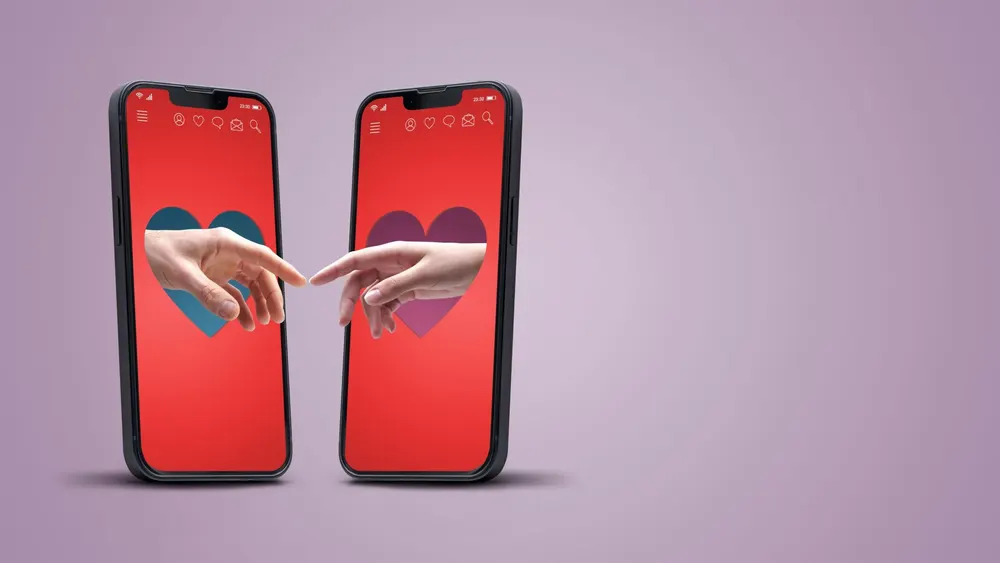
Build a dating app whose core mechanic is a progressively-revealing profile photo: two people start chatting with faces hidden or blurred, and the photo only sharpens as they exchange a set number of messages, forcing a personality-first connection before looks. This exact mechanic isn't hypothetical — S'More, a funded, press-covered dating app, ran this precise feature (photos unblurred after around 15 messages exchanged, later reworked into a pie-chart reveal) for several years. S'More was acquired by matchmaking service Tawkify in 2023 and has since wound its own app down — which validates real demand for the mechanic while leaving the specific niche open again. Realistically this launches on a white-label dating-app builder (not custom development), branded and scoped to one city or campus first, monetized the standard dating-app way: a free tier plus a paid subscription (roughly $15-30/month) for unlimited likes and faster reveals.
S'More — a funded, press-covered dating app — ran this exact mechanic for years, then was acquired by Tawkify in 2023 and wound its own app down: a niche validated and vacated at the same time, which is rare. What is left is a proven feature with no dedicated competitor holding it. Low competition here means the mechanic and the niche, not the category — Tinder and Hinge are enormous and almost irrelevant to a campus-sized market, where the only competitive question that matters is whether the other four hundred people are on it too. What decides whether users stay is not the reveal itself but trust and safety operations and a hyper-local launch, and both are solved problems with known prices: one dense campus or city, a part-time moderation contractor, and the first 200–500 users recruited by hand.
S'More didn't fail — it was acquired by a matchmaking company and folded into a different product, which is a completely different signal from a mechanic that flopped with users. Someone else spent the venture money proving people want this and then left the category, so treat the blur-reveal itself as validated and spend your own budget on the part that is still unsolved: the standard dating-app cold start, which needs both sides of the match present in one local market at the same time. That is why the plan below launches on a single campus rather than a country.
January (the industry-wide dating-app spike from New Year's resolutions) is the peak, with a smaller pre-Valentine's bump in early February.
Suits you if
- ✓You can commit to launching in one dense local market (a city or campus) rather than nationally
- ✓You're comfortable operating a white-label platform rather than custom-coding an app
- ✓You can commit to real trust & safety operations (reporting, blocking, moderation) from day one
Skip it if
- ✕You want to launch nationally right away — a dating app with no local density fails on match volume alone
- ✕You're not willing to budget ongoing time and money for moderation and safety, not just the initial build
- ✕You expect the photo-reveal mechanic to carry the launch on its own, without a specific community to launch it into
Skills: No custom development needed — a white-label dating-app builder plus Apple/Google developer accounts covers the tech. The real skills are hyper-local community-building (recruiting the first few hundred users in one place) and ongoing trust & safety operations (moderation, reporting flows) that both app stores require before approval.
What $1,500 actually buys$1,500–$1,500 · 5 line items
| Line item | Low | High |
|---|---|---|
| White-label dating-app builder license (first 3 months)REQ'D | $700 | $700 |
| Apple + Google developer accountsREQ'D | $124 | $124 |
| Branding/logo/basic marketing assetsREQ'D | $150 | $150 |
| Hyper-local launch marketing (campus/city ads, flyers)Concentrated in one local market, not spread nationally | $400 | $400 |
| Contingency | $126 | $126 |
Unit economics$20 per sale · break-even at 50 paying subscribers
Per sale
- Monthly subscription revenue
- $25
- App store fee (~15% small-business tier)
- −$4
- Support/infrastructure cost per subscriber
- −$1
- Contribution
- $20
Fixed costs per year
- App builder platform license (post-intro)
- $2,400
- Trust & safety/moderation contractor
- $6,000
- Cloud/hosting
- $600
- Baseline marketing
- $3,600
- Total
- $12,600
What that means
$20 of every $25 subscription is contribution — an 80% margin — after the App Store's small-business tier fee and per-subscriber infrastructure. The costs that matter here are the fixed ones below, moderation above all, not the marginal cost of another subscriber.
What kills this business3 risks · 1 high severity
First 90 days3 phases · 3 gates
Choose a white-label dating-app builder, configure the message-count-based photo reveal, brand it, and submit to both app stores.
Launch in one city or campus and hand-recruit the first 200-500 users directly to solve the cold-start problem rather than relying on organic discovery.
Track week-4 retention and message-to-match conversion in the first market before spending on a second one — trust & safety operations need to be solid at this scale too.
Tools, by stage$700-900 · 3 things not to build
Validate
- —A landing page + waitlist to gauge interest before building anything
- —Manually test the reveal concept with about 20 real people in your target market
Launch
- —A white-label dating-app builder platform
- —Apple + Google developer accounts
- —In-app subscription billing (App Store/Play Billing or Stripe)
Avoid
- ×Custom-coding the app from scratch before validating demand locally
- ×Launching nationally instead of one dense market first
- ×Skipping a real moderation/reporting flow to save on launch costs
Legal & insurance2 non-negotiable · 1 you can skip
- ●Terms of Service + Privacy Policy covering user-generated content, safety reporting, and message/photo data handling — required by both app stores before approval.
- ●A working block/report/moderation flow live before public launch — both Apple and Google reject dating apps without one.
- ◐Age-verification/18+ gating appropriate to a dating product, especially if launching near a college campus.
- ○No dating-specific government business license is required in most US states — the real gatekeeper is app-store policy compliance, not a government permit.
Sources & method3 sources · reviewed Sep 2026
- S'More (dating app) — WikipediaThe direct real-world precedent for the message-count-based photo reveal mechanic
- TechCrunch — Tawkify acquires S'MoreConfirms the predecessor app was acquired and its own app wound down, leaving the mechanic without an active dedicated competitor
- S'More FAQDescribes the exact blur-reveal mechanic (photo unblurs as both sides exchange messages)
That was one of 5 free ideas.
The other 1,000+ are locked.
If this one isn't quite yours, that's the point of reading it — you now know exactly what you're looking for. There are 301 more in AI & Technology you haven't seen, 191 of them starting under $2,000, each written to the same depth as the page above.
Scores are real. The ideas behind them unlock with the database.